


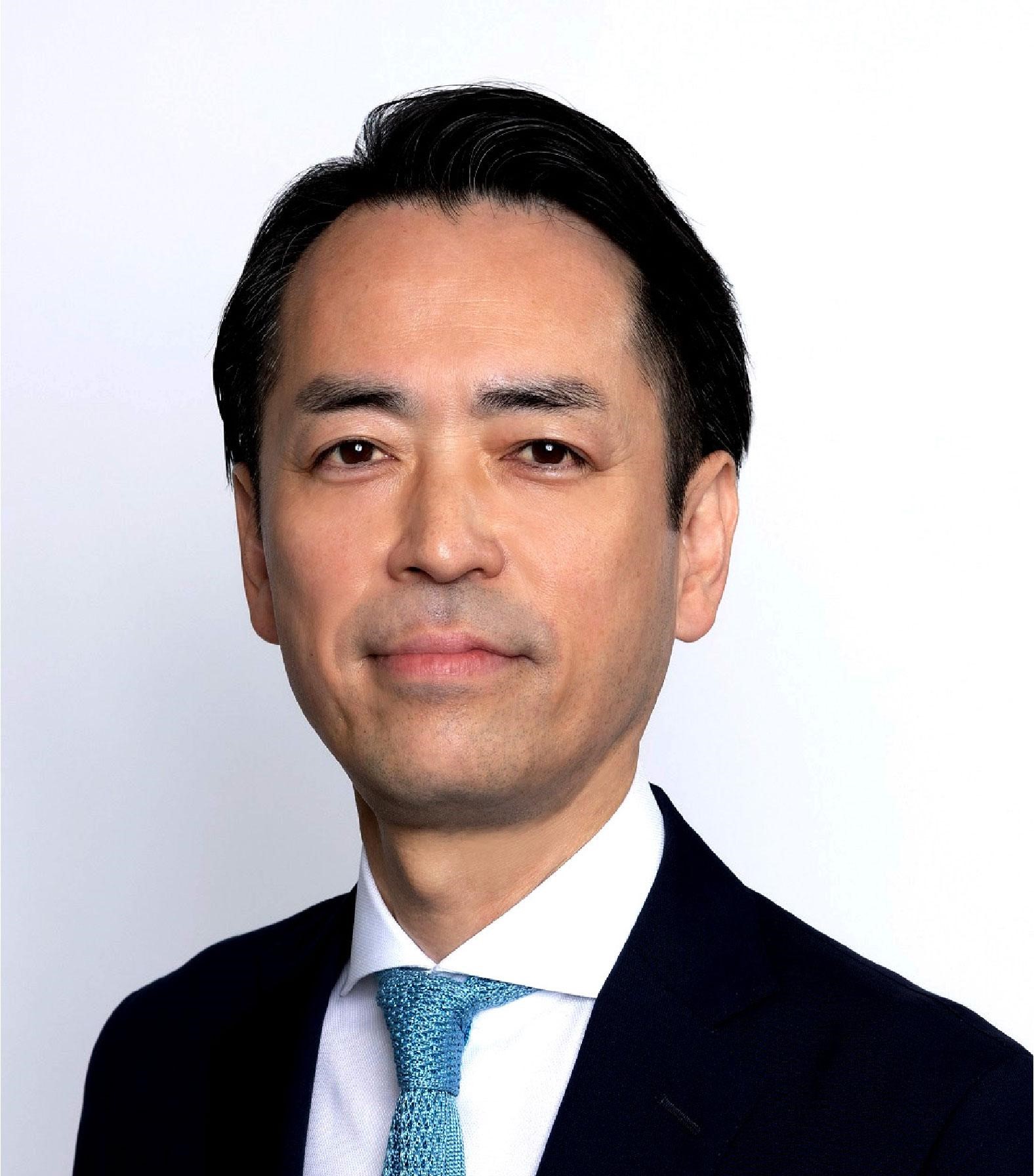
Hiroyuki Yamamoto
Executive Director,
Mori Hills REIT
Investment Corporation
Mori Hills REIT
Investment Corporation
All of us at Mori Hills REIT Investment Corporation ("MHR") wish to extend our deep appreciation to our unitholders for your continuous support of MHR. I am pleased to report on MHR’s performance for the fortieth fiscal period which ended July 31, 2026.
In the fortieth fiscal period, despite the ongoing impact of heightened tensions in the Middle East and price hikes, as well as weakness in consumer spending, the Japanese economy continued to improve moderately, supported by increases in capital investment and exports.
In such an economic environment, a tight supply-demand balance persisted in the rental office market, as vacancy rates in central Tokyo remained low and efforts to attract tenants for upcoming new supply progressed smoothly, while rent levels continued to trend upward. As for the luxury rental housing market, although supply has increased due to large-scale redevelopments in central Tokyo, occupancy rates and rent levels remained solid on the back of continued robust demand for quality housing. In terms of the real estate brokerage market, transaction volume remained at a high level and transaction prices also remained persistently high, thanks to sustained strong investment appetite from domestic and foreign investors and the boost provided by several major transactions from foreign-affiliated corporations.
In the fortieth fiscal period, MHR strove to maintain and enhance tenant satisfaction through measures such as efficient and systematic operational management and maintenance and repair of properties in its portfolio by better understanding tenant needs. Moreover, MHR maintained and enhanced occupancy rates and rents by proactively launching leasing activities targeting new and existing tenants while foreseeing trends in rental market conditions. MHR’s real estate portfolio, as of the end of the fortieth fiscal period, was comprised of 11 properties under management with a total leasable area of 185,248.80m2. MHR has already invested 414,958 million yen (based on the acquisition price) into this portfolio. The occupancy rate at the end of the fortieth fiscal period was 98.2%.
The asset management activities described above resulted in MHR recording in the fortieth fiscal period 11,126 million yen in operating revenue, 6,688 million yen in operating income, 5,808 million yen in ordinary income and 5,807 million yen in net income and a dividend per unit of 3,100 yen. MHR divested a portion of Laforet Harajuku (Land) (disposition price: 2,365 million yen) on July 1, 2026. A 1,257 million yen gain was realized on the disposition.
In addition, MHR plans to divest a further portion of Laforet Harajuku (Land) (disposition price: 2,365 million yen) on December 1, 2026. For the forty-first fiscal period ending January 31, 2027, dividends per unit is expected to be 3,100 yen.
MHR will continue to seek maximization of unitholder value by maintaining and increasing dividends continuously while retaining stability of earnings through fixed-rent master leases alongside actively pursuing external growth utilizing the property pipeline of the Mori Building Group.
I would like to ask for your continued support.
In the fortieth fiscal period, despite the ongoing impact of heightened tensions in the Middle East and price hikes, as well as weakness in consumer spending, the Japanese economy continued to improve moderately, supported by increases in capital investment and exports.
In such an economic environment, a tight supply-demand balance persisted in the rental office market, as vacancy rates in central Tokyo remained low and efforts to attract tenants for upcoming new supply progressed smoothly, while rent levels continued to trend upward. As for the luxury rental housing market, although supply has increased due to large-scale redevelopments in central Tokyo, occupancy rates and rent levels remained solid on the back of continued robust demand for quality housing. In terms of the real estate brokerage market, transaction volume remained at a high level and transaction prices also remained persistently high, thanks to sustained strong investment appetite from domestic and foreign investors and the boost provided by several major transactions from foreign-affiliated corporations.
In the fortieth fiscal period, MHR strove to maintain and enhance tenant satisfaction through measures such as efficient and systematic operational management and maintenance and repair of properties in its portfolio by better understanding tenant needs. Moreover, MHR maintained and enhanced occupancy rates and rents by proactively launching leasing activities targeting new and existing tenants while foreseeing trends in rental market conditions. MHR’s real estate portfolio, as of the end of the fortieth fiscal period, was comprised of 11 properties under management with a total leasable area of 185,248.80m2. MHR has already invested 414,958 million yen (based on the acquisition price) into this portfolio. The occupancy rate at the end of the fortieth fiscal period was 98.2%.
The asset management activities described above resulted in MHR recording in the fortieth fiscal period 11,126 million yen in operating revenue, 6,688 million yen in operating income, 5,808 million yen in ordinary income and 5,807 million yen in net income and a dividend per unit of 3,100 yen. MHR divested a portion of Laforet Harajuku (Land) (disposition price: 2,365 million yen) on July 1, 2026. A 1,257 million yen gain was realized on the disposition.
In addition, MHR plans to divest a further portion of Laforet Harajuku (Land) (disposition price: 2,365 million yen) on December 1, 2026. For the forty-first fiscal period ending January 31, 2027, dividends per unit is expected to be 3,100 yen.
MHR will continue to seek maximization of unitholder value by maintaining and increasing dividends continuously while retaining stability of earnings through fixed-rent master leases alongside actively pursuing external growth utilizing the property pipeline of the Mori Building Group.
I would like to ask for your continued support.
